




Oral cancer screening remains one of the most important preventive services provided during routine dental visits. Although many patients consider dental appointments to be cleanings, fillings, and exams, oral cancer screenings are an important part of identifying potential concerns before symptoms become more noticeable. Recently, healthcare providers have increasingly focused on early detection, as early diagnosis of abnormalities often leads to better outcomes.
As a family dentist who treats patients in Seattle, WA, we believe that preventive care should be more than just keeping your teeth and gums healthy. Regular screenings help us to detect changes in the mouth, tongue, throat, and surrounding tissues that may need further attention. Oral health is directly related to general health. Regular visits to a Seattle dentist will help you monitor your oral health and identify issues you might not otherwise notice.
Understanding Oral Cancer and Its Risk Factors
Oral cancer can develop in different parts of the mouth & throat, such as the lips, tongue, cheeks, gums, floor of the mouth, and the soft palate. Healthcare professionals have identified more than just tobacco use and alcohol consumption as risk factors.
The human papillomavirus, or HPV, has been more and more associated with certain kinds of oral and throat cancer. Also, a person’s age, long-term sun exposure to the lips, family history, and some lifestyle habits can influence the overall risk profile.
In the early stages of oral cancer, there can be very little discomfort, so many people are unaware that they may have a problem until the symptoms are more advanced. This is why regular screenings remain an important part of routine preventive dental care.
Why Early Detection Matters
Early detection often gives healthcare providers the opportunity to pursue treatment options before a condition progresses. Detection of suspicious lesions, tissue changes, or atypical growth patterns during a screening can lead to earlier evaluation and intervention when necessary.
Many patients are surprised to learn that oral cancer screenings typically take only a few minutes and can be performed during a routine dental check-up.
What Happens During an Oral Cancer Screening?
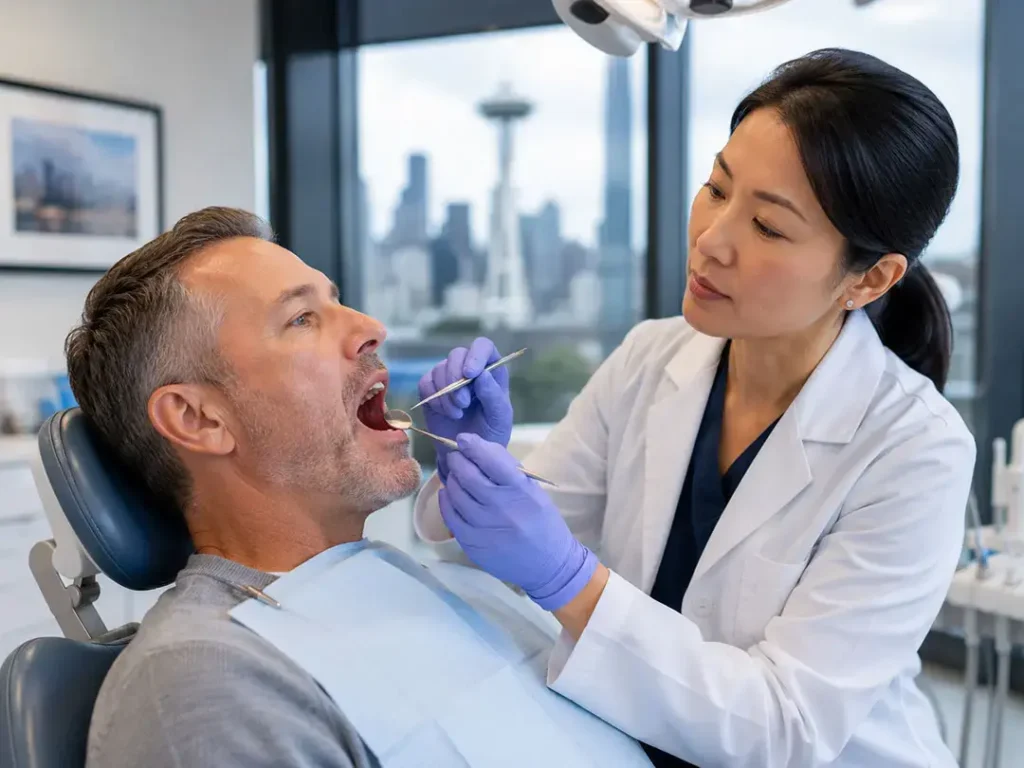
Professional screening for oral cancers is simple and non-invasive. During the exam, we visually assess abnormalities in the oral tissues and surrounding structures. We also look at areas patients may not see clearly during their daily oral hygiene routine.
The examination may involve looking at the tongue, cheeks, gums, lips, floor of the mouth, palate, and throat. We also check for abnormal changes in color, non-healing sores, tissue thickening, lumps, or other changes that may require further evaluation.
Monitoring Changes Over Time
Routine screenings offer a chance to compare findings from prior visits. Small changes may be more noticeable if dental professionals have a recorded history of the patient’s oral health. This ongoing monitoring might be particularly useful for people at higher risk.
Common Signs That Should Not Be Ignored
It is designed to find problems before they have symptoms, but patients should still be aware of warning signs that require attention. Persistent mouth sores, unexplained lumps, difficulty swallowing, ongoing sore throat, changes in voice quality, numbness, or areas of abnormal discoloration should be evaluated by a health professional.
Many of these symptoms may also be caused by conditions other than oral cancer. But if the symptoms persist or do not improve, a professional examination is increasingly important.
The patient can discuss any changes they have experienced and receive appropriate advice that is relevant to their situation during regular visits to the dentist.
The Role of Preventive Dental Care
Preventive dentistry is about more than a healthy smile. Regular examinations help to detect conditions affecting the teeth, gums, jaw, and oral tissues before they become more difficult to control.
As your family dentist, we recommend that patients consider oral cancer screenings as part of their regular preventive health care. These tests, like blood pressure screenings and other wellness checks, contribute to a broader picture of health.
In reality, for many people, regular dental visits are often the most regular chance for professional observation and oral cancer screening.
Frequently Asked Questions
What is an oral cancer screening?
An oral cancer screening is a preventive examination that evaluates the mouth, tongue, throat, lips, and surrounding tissues for signs of abnormal changes or potential concerns.
How often should I receive an oral cancer screening?
Many patients receive oral cancer screenings during routine dental examinations. The appropriate frequency may vary depending on individual risk factors and oral health history.
Does an oral cancer screening hurt?
No. Oral cancer screenings are non-invasive and typically involve a visual examination and gentle evaluation of oral tissues.
Why should I visit a dentist in Seattle for an oral cancer screening?
Regular visits to a Seattle dentist allow for professional monitoring of oral health and provide opportunities to identify potential concerns before symptoms become more advanced.
Protecting Your Oral and Overall Health
Preventive healthcare continues to play an important role in maintaining overall wellness. Routine oral cancer screenings provide an opportunity to identify abnormalities early, monitor changes over time, and support informed healthcare decisions. As a family dentist serving patients throughout Seattle, WA, we believe preventive care remains one of the most effective ways to support both oral and overall health. Scheduling regular visits with a Seattle dentist helps create opportunities for ongoing evaluation and early detection of concerns.
Contact Us Today
If it has been some time since your last dental examination, we invite you to schedule an appointment with our team. We are committed to providing preventive care, professional evaluations, and personalized treatment recommendations that support your oral health goals. Contact us today to schedule your next visit and learn more about our preventive dental services.
Picture Source: AI-generated